




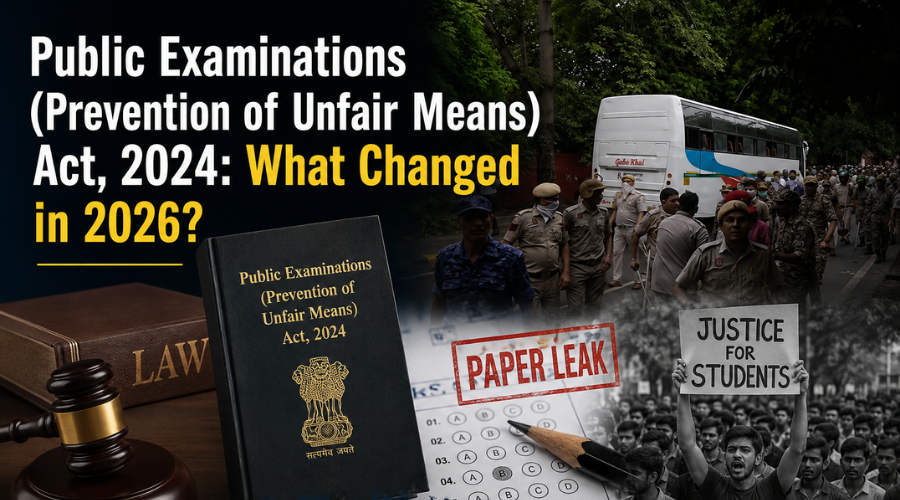
After the cancellation of NEET-UG 2026 and the nationwide protests it triggered, Parliament strengthened India’s anti-paper leak law. Here’s everything you need to know about the Public Examinations (Prevention of Unfair Means) Act, 2024 and the major changes introduced through its 2026 amendment.
The Public Examinations (Prevention of Unfair Means) Act, 2024 is India’s first comprehensive central law to curb question paper leaks, organised cheating and other malpractices in public examinations. The Act aims to safeguard the integrity, transparency and fairness of examinations conducted by central agencies such as the UPSC, SSC, Railway Recruitment Boards, National Testing Agency (NTA) and Institute of Banking Personnel Selection (IBPS).
It defines a wide range of unfair practices, including leaking question papers or answer keys, impersonation, tampering with computer systems, conducting fake examinations and manipulating merit lists. Individuals found guilty of such offences can face imprisonment of three to five years and a fine of up to ₹10 lakh, while those involved in organised examination fraud can face five to ten years’ imprisonment and a minimum fine of ₹1 crore.The Act also empowers authorities to investigate offences and take stringent action against institutions or service providers involved in examination malpractice.
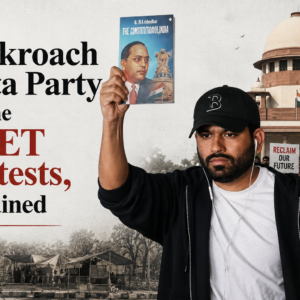
The law was significantly strengthened through the Public Examinations (Prevention of Unfair Means) Amendment Act, 2026, following the cancellation of NEET-UG 2026 over a question paper leak. The controversy sparked nationwide protests led by the Cockroach Janata Party (CJP) and other student organisations, demanding stricter action against those responsible and reforms to restore the credibility of public examinations. Reports of student suicides linked to the uncertainty surrounding the examination further intensified public concern.
The amendment increased the punishment for individuals using unfair means from three to five years’ imprisonment to five to ten years, while the maximum fine was raised from ₹10 lakh to ₹50 lakh. For organised examination fraud, the minimum jail term was increased from five years to seven years, while the minimum fine was raised from ₹1 crore to ₹10 crore. The amendment also mandates that investigations be completed within two months, empowers the Centre to constitute Special Task Forces to investigate offences, and requires States and Union Territories to designate Special Fast Track Courts for speedy trials of paper leak cases.
News in Same Category
 Enforcement Directorate Conducts Raids on Properties Linked to Ballari MLA Nara Bharath Reddy
 Karnataka High Court Rejects Plea from Kerala CM’s Daughter’s Company, Contesting SFIO Investigation
 Calcutta High Court Suggests Renaming Siliguri Zoo Animals Amid Controversy Over ‘Sita’ and ‘Akbar’ Names
 Trinamool Congress Announces Lok Sabha Poll Candidates: Yusuf Pathan and Mahua Moitra Among Nominees
 Centre Implements CAA Ahead of Elections; Opposition Raises Criticisms
 Arvind Kejriwal Arrested by ED in Delhi Liquor Policy Case
 Supreme Court to Consider Arvind Kejriwal’s Plea Amidst Political Turmoil in Delhi
 Rajnath Singh Expresses Surprise at A K Antony’s Statement Advocating Anil Antony’s Defeat in Lok Sabha Polls
 Nirmala Sitharaman Hints at Reviving Electoral Bonds Scheme Under Future Government
 Kolkata Police’s Special Team Summons Raj Bhavan Staff Over Sexual Harassment Allegations Against West Bengal Governor
 Modi: Rahul Gandhi Demonstrates ‘Baalak Buddhi’ Amidst Congress’s Third Consecutive Defeat
 Congress in Kerala Strategizes for 2025 Local Body Elections Following Lok Sabha Victory
 Amid Sangh Parivar backlash, Empuraan makers agree to cuts; many disappointed over filmmakers’ decision to comply
 Air India Jet Veers Off Runway in Mumbai During Rain; All Passengers and Crew Safe
 Congress seeks answers over Vice President Dhankhar’s unexpected resignation
 CPM Announces Candidates for Kerala Assembly Polls
 BJP Releases First List of 47 Candidates for Kerala Assembly Polls
 India Slams Trump Post Calling Country “Hellhole”
 Trump Orders US Military to “Shoot and Kill” Iranian Boats Allegedly Laying Mines in Strait of Hormuz
 Trump Dismisses Idea of Nuclear Strike on Iran, Calls Question Unreasonable