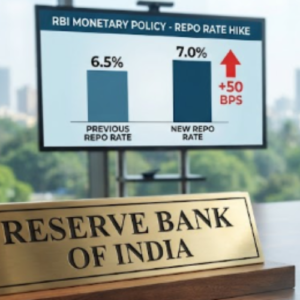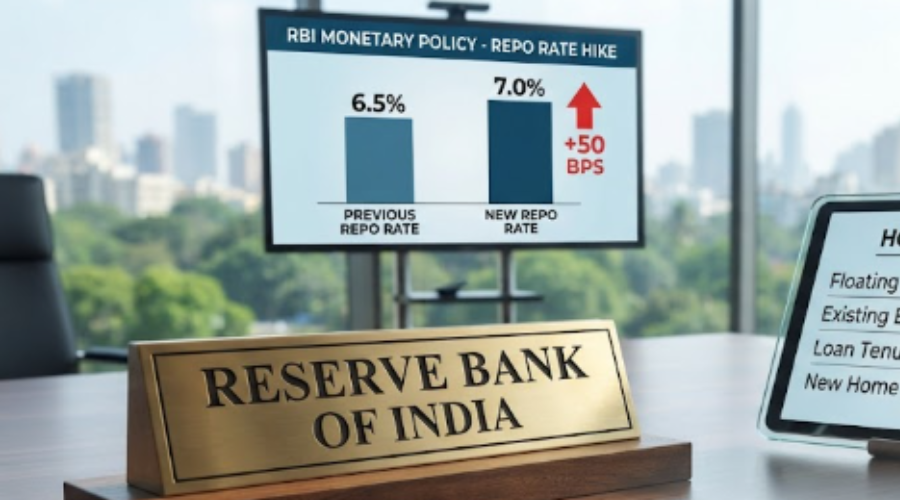
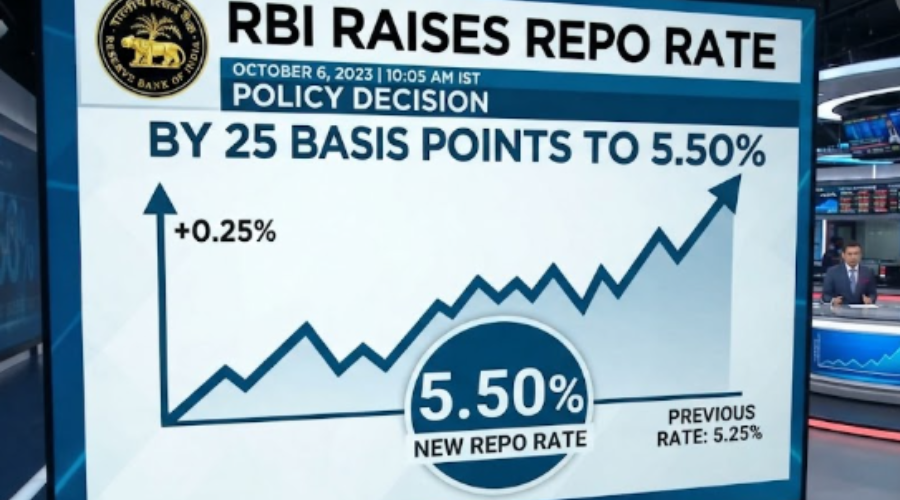








Mumbai: The Reserve Bank of India’s (RBI) repo rate hike is likely to have the most direct impact on borrowers with floating-rate loans – loans whose interest rates can change – particularly those whose loans are linked to external benchmarks – reference rates used by banks to set loan interest rates.
Many floating-rate retail loans issued in recent years are linked to external benchmarks such as the repo rate. When the benchmark rises, lenders may increase the interest rate on such loans, subject to the terms of the loan and the lender’s reset mechanism — the rule that determines when and how a loan’s interest rate can change.
For instance, a borrower with a ₹50 lakh home loan for 25 years at an interest rate of around 7.5% could see the monthly EMI rise by roughly ₹800 if the lending rate increases by 25 basis points assuming the loan tenure — the period over which the loan is repaid — remains unchanged. The actual impact would vary depending on the lender and the terms of the loan.
An increase of this size may appear modest on its own. However, the financial impact can become more significant if interest rates rise repeatedly.
Four consecutive increases of 25 basis points each would add up to a one-percentage-point increase in the interest rate. For borrowers with large home loans and long repayment periods, such increases can substantially raise the total interest payable over the life of the loan.
Depending on the loan terms, banks may increase the borrower’s EMI, extend the repayment period or make a combination of both adjustments when interest rates rise. Borrowers with fixed-rate loans are generally protected from changes during that period.
News in Same Category
 Motilal Oswal Wealth Management Makes it Easier to Invest in Bonds with New Platform
 Credit Sector Grows as Repayment Discipline Improves: Experian Report
 Tata Trusts to form Selection Committee for N Chandrasekaran’s successor
 State Street completes ₹580-crore investment in Groww AMC
 Indian mutual funds’ overseas investments rise 24% to $10.2 billion: RBI
 NSE gets green light for IPO; 10 shareholders to sell 148.9 million shares
 NSE IPO to open on September 17; price band set at ₹1,700–₹1,785
 RBI Raises Repo Rate by 25 Basis Points to 5.50%
 Inditex Partners with Ambercycle for Recycled Polyester
 Zyla Health Secures $4 Million to Accelerate Expansion in Insurance, Corporate, and Pharmaceutical Sectors
 UltraTech Cement Successfully Acquires Kesoram Industries’ Cement Business, Expands into Southern Markets
 RBI: Rs 2000 Notes Worth Rs 9760 Crore Still Held by the Public
 Go First CEO Kaushik Khona Resigns Amid Insolvency Proceedings, November 30 Marks Final Day
 Whirlpool Corp Plans to Sell up to 24% Stake in Whirlpool of India Ltd in 2024 for Debt Reduction
 Paytm CEO Holds Talks with Nirmala Sitharaman After RBI Imposes Restrictions on Payments Bank Services, Says Report
 Tesla Files Trademark Lawsuit Against Tesla Power India Ltd
 India’s Growth Forecast Trimmed to 6.5% by ADB Amid Global Trade Uncertainty
 Gold climbs to ₹1.02 lakh per sovereign; silver also firms up
 Nirma Group plans entry into hospitality
 HLL Organises ‘Diamond Jubilee Partners Meet Samanvaya 2026’