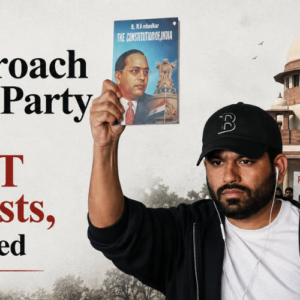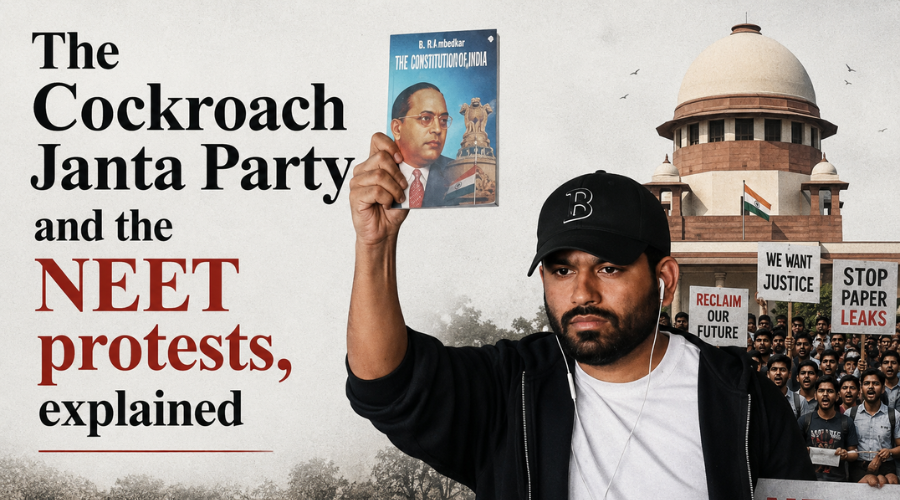



The Cockroach Janta Party (CJP) is a youth protest movement founded by Abhijeet Dipke on May 16, 2026. Dipke was born in Aurangabad, Maharashtra. He completed his undergraduate degree in journalism in Pune before moving to the United States, where he earned a Master of Science in Public Relations from Boston University. The movement was started after Chief Justice of India Surya Kant, during a Supreme Court hearing, compared some unemployed young people and activists to “cockroaches” and “parasites.” Instead of treating the remarks as an insult, Dipke and many young people adopted the name “Cockroach” and launched the CJP.
On June 6, 2026, Dipke returned from the United States to lead a protest at Jantar Mantar in New Delhi, demanding the resignation of Union Education Minister Dharmendra Pradhan over the NEET paper leak. The protest followed allegations of irregularities in the National Eligibility-cum-Entrance Test (NEET-UG), which was held on May 3, 2026, and was taken by around two million students across India. Investigations into the alleged paper leak triggered nationwide protests and demands for greater transparency in the examination process. Authorities later conducted a re-examination for affected candidates. The paper leak allegations and the uncertainty surrounding the examination also coincided with reports of several suicides among NEET aspirants. Families and media reports attributed some of the deaths to the stress and uncertainty caused by the examination process.
CJP launched an indefinite sit-in at Jantar Mantar on June 20, attracting thousands of students, job aspirants, teachers, parents and civil society members from across the country over the following weeks. The agitation also received support from several student organisations and leaders of the INDIA alliance. After a month of demonstrations, CJP organised the “Sansad Chalo” march towards Parliament on July 20. As protesters marched towards Parliament, clashes broke out with Delhi Police, and several protesters were detained amid allegations of excessive use of force.
Meanwhile, activist Sonam Wangchuk, who joined the protest with an indefinite hunger strike on June 28, ended his 26-day fast on July 23 after the Union government assured examination reforms and accountability measures following negotiations with Union ministers. On July 25, CJP called off its 36-day protest after the Centre agreed to its key demands, including the resignation of Union Education Minister Dharmendra Pradhan and the withdrawal of cases against protesters. The Union government subsequently constituted a task force chaired by Nandan Nilekani to recommend comprehensive reforms to the public examination system and introduced legislation in Parliament to strengthen penalties for examination fraud and paper leaks. Declaring the agitation a victory, CJP said it would continue to monitor the implementation of the promised reforms while campaigning for greater transparency and accountability in the public examination system.
News in Same Category
 Enforcement Directorate Conducts Raids on Properties Linked to Ballari MLA Nara Bharath Reddy
 Karnataka High Court Rejects Plea from Kerala CM’s Daughter’s Company, Contesting SFIO Investigation
 Calcutta High Court Suggests Renaming Siliguri Zoo Animals Amid Controversy Over ‘Sita’ and ‘Akbar’ Names
 Trinamool Congress Announces Lok Sabha Poll Candidates: Yusuf Pathan and Mahua Moitra Among Nominees
 Centre Implements CAA Ahead of Elections; Opposition Raises Criticisms
 Arvind Kejriwal Arrested by ED in Delhi Liquor Policy Case
 Supreme Court to Consider Arvind Kejriwal’s Plea Amidst Political Turmoil in Delhi
 Rajnath Singh Expresses Surprise at A K Antony’s Statement Advocating Anil Antony’s Defeat in Lok Sabha Polls
 Nirmala Sitharaman Hints at Reviving Electoral Bonds Scheme Under Future Government
 Kolkata Police’s Special Team Summons Raj Bhavan Staff Over Sexual Harassment Allegations Against West Bengal Governor
 Modi: Rahul Gandhi Demonstrates ‘Baalak Buddhi’ Amidst Congress’s Third Consecutive Defeat
 Congress in Kerala Strategizes for 2025 Local Body Elections Following Lok Sabha Victory
 Amid Sangh Parivar backlash, Empuraan makers agree to cuts; many disappointed over filmmakers’ decision to comply
 Air India Jet Veers Off Runway in Mumbai During Rain; All Passengers and Crew Safe
 Congress seeks answers over Vice President Dhankhar’s unexpected resignation
 CPM Announces Candidates for Kerala Assembly Polls
 BJP Releases First List of 47 Candidates for Kerala Assembly Polls
 India Slams Trump Post Calling Country “Hellhole”
 Trump Orders US Military to “Shoot and Kill” Iranian Boats Allegedly Laying Mines in Strait of Hormuz
 Trump Dismisses Idea of Nuclear Strike on Iran, Calls Question Unreasonable